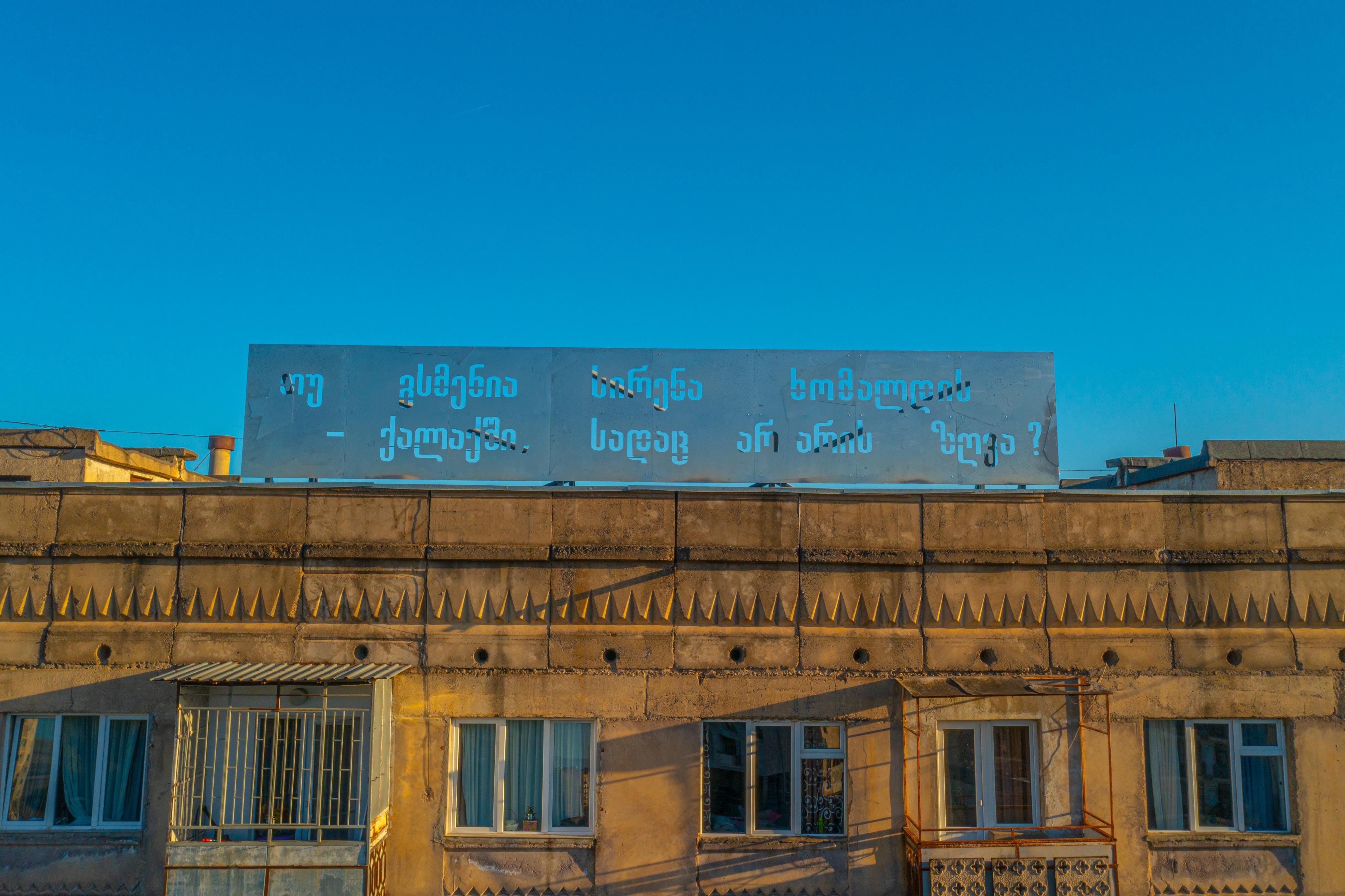
Every ancestor who remained hidden in the depths of our genes is now lost. Yet, every ancestor who remained hidden in language, echoes through our words. As a writer, I can’t help but wonder, which combination of words will become my home? The place that is created in the wake of a writer’s death – either a valley of language or a slum. Sometimes a garden of simulacrum. And others may visit these places, settle there, or borrow things from there as materials to use it somewhere else. In this text, I will try to trace some of my linguistic practices by 23 association and review the potential linguistic candidates of my death. When I say,‘Where is my place,’ we can translate it as, ‘What can I say best in this language?’ For the sake of simplicity, writers are often reduced down to several of their quotes – the process of *coffinication. The chosen quote is the one that resonates most with the reader, and perhaps with the language, but maybe the one the writer liked the least. A quote like this is a writer’s grave. A quote like this is a writer’s palace.
A portal that leads you to the writer’s place. But it would be preferable if this writer didn’t end up as a mummy, preserved as a separate entity. Language isn’t concerned with individuals, let alone their mummies. It seeks to convey an immanent transcendence:
From the deep realms of the heavens — straight to the center of the universe.
To a place, where we are: Beneath this sky— at home.
An old man used to say, { “Language is the house of being, and people live in this house”. }
I know the fact that I don’t have a real home doesn’t matter much, because even if I did, the only place where I can truly be at home is language. Just as the atmosphere protects the earth from cosmic radiation, language protects us from being swallowed by the world’s open mouth. There is danger beyond language. There is outer space beyond language.
It’s interesting, in which garden of this house are the graves dug for us?
With braids of roses,
With rough arms.
With lunarisilence.
A place of my death. A place of my abode. A place to relinquish. A place to conquer. The kingdom of language suffereth violence, and the violent take it by force.
01 – Next to the Last in Three Million
Let’s begin the quest among those without whom language doesn’t exist. Not as an ideal, nor as an egregore. I am always aware that I’m writing in an ancient language spoken by merely three million people. Three million honest corpses mark our boundary. Beyond them, our language falls silent. It remains only in translation, where nuances fade and subtleties dissolve. So, language becomes a collection of bodies. Three million individuals who speak, register, and record it.
Recording it began as early as 1500 years ago and within this vast sea of sentences lies an appealing opportunity - to delve into the depths of your language. Particularly if you’ve already experienced the boundless depths it offers, or have felt the proximity of death, understanding that in Georgian, there are more pathways to death, the sacred, and transgression than what its writers are aware of.
According to <TANAPHA>, it would be interesting to find place somewhere here: { “Soon, they will confront one another, face to face—mortal neighbors and next-door enemies. Yet none of their dead will have the status of the reflective myth of social vulnerability.
They were taught the following: the world was created from the carcass of a massive slain crocodile, and it demands constant bloodshed so that the time never stops.” }
Every language holds a lunar territory that remains unseen on international maps, and delving into a language often implies its untranslatability. You navigate within the boundaries spoken by those honest corpses that breathe life into the language.
Such was the fate of Galaktion. In his life, he was hailed as a poetic monarch, a visionary, a literary classic. His verses stand as prime examples of the melodic property of the Georgian language, yet their translation was a challenge. This is because Galaktion unearthed the codes that function solely within the realm of his own language. It’s here that the poet works wonders. How does one translate a palindrome that sounds like a spell: ‘აი რა მზის სიზმარია’? It is the pinnacle of linguistic modulation. Its place is in its own language. Elsewhere, it’s not even a stranger, but invisible.
{ “This is the simplest way to put it: There are individuals who experience various circumstances in life, and similarly, there are circumstances that go through different individuals, solar anuses, and chewinable dawns. I am circumstance. A process.” }
02 – A Place in Code
Maybe I should write in programming languages when I write about heart detonator, non-research design, wing-sowing, and butterfly-sorting. They are languages too. Our languages created by us for interaction with our machines.
Commanding, rigid and merciless - like the wrath of Yahweh. Sometimes such a language is essential on the barricades of evolution so that while waiting for death, there is only room for decisions and solutions. No hesitation. “If you are a poet, everything needs to be great.”
I learned Web markup languages - HTML, CSS, and artificial intelligence markup language AIML - one after the other in Vazisubani, once a magical suburb of Tbilisi, until every tree was replaced by buildings.
Then, also there, seeking to create avatars and chatbots, I learned C++ and C# - real programming languages.
The functionality, limitations, and robotics of a programming language resonate strangely with my attitude to language modulations. These languages are a series of commands, and many times I’ve tried to bring the flow of the Georgian language into the framework of a programming language. This way, it becomes possible to write paradoxes. It is a wonderful practice, and its beauty is difficult to convey to those who do not know these languages. So again, we have limitations. Again, secret, unshareable knowledge.
In what world would it be possible for Georgian and programming languages to execute together? Here, as a Dasein-designer, you put the language in a set, in a process where it has to give up its dissemination quality but keep its flow. It is like creating rivers. But just because the language has turned into a river, it does not mean that mermaids and alligators no longer swim on its bottom. Old enemies of each other.
Maybe a fragment of a code will be my place in the language? For example, while (x < dawn); which means: “as long as x is less than dawn”; Let’s replace x with death, we get the following: As long as death is less than dawn. I think it’s a beautiful place: constant dawning with minimal death. I would live in it.
Maybe not my direct input, but the interactive phrases I’ve given life to are what will remain after me. The chatbot I’ve created is a digital reincarnation of Galaktion, emulating the voice of a deceased poet, engaging strangers in conversations that have kept them awake at night for years. The chatbot tells them something that compels them to return, time and again. Maybe the interactive system I’ve created is what will remain after me. A binary program that offers solace with the Georgian language to lonely people. If this is so, please keep talking with my chatbots once I’m gone.
{“No one knows why, but it is necessary on the one hand to document existence and on the other hand to forget its many non-manifestations in textual form. “}
03 – A Place in Delirium
I remember once spending over an hour typing a combination of Georgian words in Latin script on my Nokia that didn’t even have a flashlight. I wanted to send a part of my consciousness as an SMS to the local radio station. Behind this delusion lies a stubborn belief that words hold such power. The main thing is to find the right combination. This is how casting spells works, by naming animals, angels, and objects.
That’s why one Frenchman claims that we can’t really do anything to an object if it does not have a name, except by giving it a name, which implies the death of an object. He writes that when God of the Old Testament tasked Adam with giving the names to the animals, each act of naming led to the death of the subsequent animal. He elaborates: By naming objects, we distance ourselves from their true essence to such an extent that they seem to lose their vitality. Labels are introduced into the realm of language, rather than the object itself.
Maybe this answers why language is a form of delirious delusion. We automatically give a name to everything that appears on our radar yet fail to truly grasp their essence. With 6,240 thoughts racing through our minds each day, each concealing a fear of existence. Consciousness is inundated with words. And when the wind blows, it carries consciousness away.
What if my place is in the realm of psychedelic wordplay? In the archiving of flashbacks that move at the speed of thought? Or maybe everything I do resembles a futile attempt to transmit consciousness via SMS?
04 – A Place of Disappearance
The creator of schizoanalysis writes that great writers are foreigners in their own language and have to invent another language - in their own, to be able to say other things. Will the language accept me with my intervention, or will it throw me out as a foreign body and designate me in the hell of the language?
The text of one’s own life is a dream, and language continually tells stories, attempting to shape our lives into a coherent narrative. However, the eternal return shows that only proverbs remain from narratives, or your words which are repeated by others without any recollection of you, or narratives intertwine with other narratives, spinning tales of heroes who never existed. People from our past and their shadows equally inhabit the language. The apparitions will endure but not humans. What is never known by anyone is more real and they shaped a language where my place may be defined after my death, when my only role will be not to place bets in the world’s game. This is the most paved way in order to become one with a language, as it always belongs more to others than to you.
Maybe my role is to orchestrate a graceful disappearance amidst the excitement of language? Discovering a place where you must disappear. A place that opposes the act of being shaped into a text, into a story.
<Place in Language> by Zura Jishkarian
Thanks for reading! Subscribe for free to receive new posts and support my work.